
 UEWM Connect Editorial Team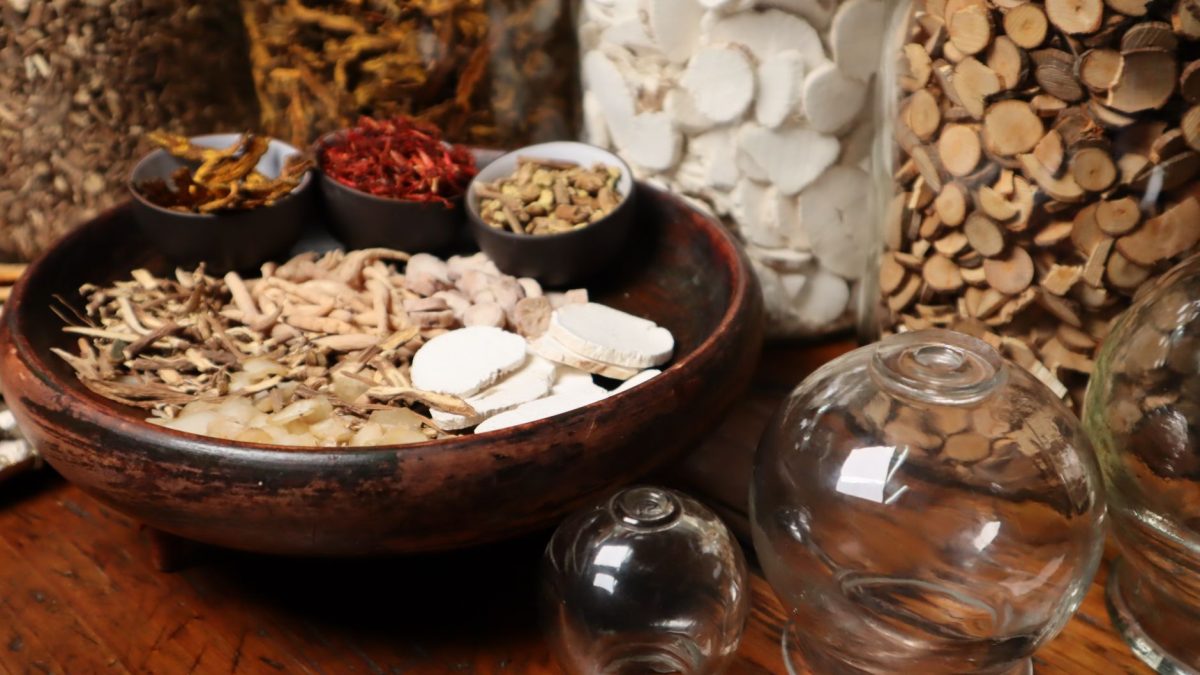
Qi in Traditional Chinese Medicine is one of the foundational concepts used to understand vitality, movement, functional balance, and the relationship between human health and the wider natural world. At the University of East-West Medicine, the study of qi is approached not simply as an ancient idea, but as part of a living medical tradition that continues to inspire education, clinical practice, research, and thoughtful dialogue with modern healthcare.
An educational perspective exploring traditional Chinese medicine, modern healthcare, and the evolving CoreGate-Verse framework.
Few concepts in East Asian medicine are as widely discussed—or as frequently misunderstood—as qi. In traditional Chinese medicine (TCM), qi provides a language for understanding how bodily functions interact, how human beings respond to their environment, and how patterns of health may change when normal regulation becomes excessive, deficient, constrained, or disordered.
Qi developed within a philosophical and medical tradition very different from the modern laboratory model. For that reason, it is important to understand the concept within its historical and cultural context while also examining how traditional practices can responsibly coexist with contemporary healthcare, scientific inquiry, and emerging technologies.
What Qi Means in Traditional Chinese Medicine
The Chinese character for qi has been translated in different ways, including breath, vapor, influence, vital activity, and life force. No single English word fully captures its traditional meaning.
Qi is better understood as a dynamic concept. Depending on context, it may describe movement, transformation, nourishment, protection, warmth, physiological activity, or the relationship between different functions of the body.
Classical Chinese philosophy viewed human beings as participants in a larger natural system rather than as isolated biological machines. Seasons, climate, food, sleep, movement, work, emotional life, relationships, and environmental conditions were all understood as capable of influencing health.
This way of thinking helped shape a medical tradition in which health involves more than the absence of a diagnosed disease. It also includes the ability of the individual to adapt, regulate, recover, and maintain relative harmony as circumstances change.
Different Expressions of Qi
Traditional Chinese medicine developed several categories of qi to describe different functions within this larger system.
- Yuan Qi is traditionally associated with constitutional or original vitality.
- Wei Qi is associated with protective functions and the body’s exterior.
- Ying Qi is associated with nourishment.
- Zong Qi is traditionally discussed in relation to breathing, circulation, and functional activity of the chest.
These terms belong to a traditional diagnostic and philosophical vocabulary. They should not be interpreted as individual physical substances that can necessarily be isolated or measured in the same manner as oxygen, glucose, hormones, cells, or other biomedical markers.
Qi, Meridians, and Traditional Diagnosis
Within TCM theory, qi is understood to move through interconnected pathways commonly translated into English as meridians or channels.
Traditional practitioners may evaluate a person by asking about sleep, digestion, energy, appetite, pain, stress, temperature preferences, breathing, emotional patterns, and other aspects of daily life. Observation of the tongue and traditional pulse assessment may also contribute to what is known as a pattern diagnosis.
This is an important distinction from conventional biomedical diagnosis.
Two people who have the same biomedical diagnosis may receive different traditional Chinese medicine assessments because their overall presentations, constitutions, symptoms, and circumstances differ. Likewise, people with different biomedical conditions can sometimes share a similar TCM pattern.
Traditional pattern differentiation can guide a TCM treatment strategy, but it should not replace appropriate medical examination, diagnostic testing, emergency evaluation, or specialist care when these are needed.
Qi and the Practice of Chinese Medicine
Acupuncture, herbal medicine, tai chi, qigong, dietary therapy, therapeutic movement, and other traditional practices have historically been discussed within broader theories involving qi, yin and yang, the organ systems, meridians, and relationships between the human body and nature.
Today, these practices increasingly exist alongside modern medical care.
Some traditional interventions have been studied scientifically for particular symptoms and health conditions. The quality and strength of evidence vary greatly depending on the therapy, condition, methodology, and research question being examined.
For example, acupuncture has been researched for several forms of pain and other health concerns, while tai chi has been investigated in areas such as balance, physical activity, mobility, relaxation, and quality of life.
These findings should not automatically be interpreted as scientific confirmation that qi exists as a measurable physical force. Rather, they demonstrate that traditional practices can be studied through modern scientific methods while their classical philosophical explanations remain part of a different conceptual framework.
Traditional Wisdom and Modern Healthcare
One of the most important opportunities facing Chinese medicine today is not choosing between tradition and science. It is learning how to build responsible bridges between them.
Modern medicine offers extraordinary capabilities in diagnostic imaging, laboratory testing, pharmaceuticals, surgery, emergency medicine, genetics, data analysis, and increasingly artificial intelligence.
Traditional Chinese medicine contributes a different historical perspective—one that often emphasizes patterns, relationships, lifestyle, prevention, adaptation, and observation of the person within a larger environment.
These perspectives should not be treated as identical, nor should either be exaggerated beyond available evidence. But respectful dialogue between different medical traditions can encourage new questions, better education, interdisciplinary research, and more comprehensive conversations about human health.
The CoreGate-Verse Perspective
The CoreGate-Verse perspective expands this conversation by asking us to examine health, medicine, consciousness, technology, education, and human development as parts of a larger interconnected system.
From this perspective, the human being is not considered in isolation. Health exists within networks of relationships: body and mind, individual and community, movement and rest, nutrition and environment, technology and nature, knowledge and experience.
This systems-oriented way of thinking shares an important philosophical characteristic with classical Chinese thought: connection matters.
Sleep can influence mood. Stress can influence behavior. Nutrition affects physiological function. Movement changes physical capacity. Relationships influence emotional health. Environment influences opportunity. Education changes decisions. Access to healthcare changes outcomes.
The CoreGate-Verse framework encourages us to look at these relationships together rather than viewing every human challenge as an isolated event.
From Ancient Connections to Modern Systems Thinking
Traditional Chinese medicine emerged long before modern terminology such as systems biology, artificial intelligence, digital health, precision medicine, or integrated healthcare existed.
Yet the ancient emphasis on relationships and patterns raises questions that remain remarkably relevant today:
- How do different systems of the body influence one another?
- How does environment affect health?
- How do behavior, movement, nutrition, stress, and sleep interact?
- How can healthcare consider the whole person without abandoning scientific rigor?
- How can technology strengthen human care rather than distance people from it?
These questions create an important meeting place for education, research, traditional medicine, and modern innovation.
Qi, Human Connection, and a Broader View of Health
One of the enduring strengths of the concept of qi is that it encourages students and practitioners to think about relationships.
A person is more than one symptom.
A patient is more than one laboratory value.
A community is more than a collection of individual patients.
Health develops through countless interactions among biology, behavior, family, environment, culture, education, economics, and access to care.
Modern healthcare increasingly recognizes many of these relationships through areas such as preventive medicine, behavioral health, lifestyle medicine, public health, social determinants of health, and interdisciplinary care.
The language may be different from classical Chinese medicine, but the desire to understand the human being more completely remains important.
Artificial Intelligence and the Future of Integrative Medicine
The next generation of healthcare will also be influenced by artificial intelligence and digital systems.
AI can assist with organizing information, identifying patterns, supporting education, improving communication, analyzing large datasets, and helping healthcare organizations manage complex workflows.
However, technology must remain a tool rather than a replacement for human judgment, clinical responsibility, ethical decision-making, and compassionate care.
For institutions teaching traditional and integrative medicine, this creates a remarkable opportunity.
Students can learn classical medical knowledge while also developing the ability to understand modern research, digital healthcare, data literacy, responsible AI, patient communication, and interdisciplinary collaboration.
This is one area where the CoreGate-Verse concept may become especially meaningful: connecting ancient inquiry with future technology while preserving the human purpose of medicine.
The Role of the University of East-West Medicine
At the University of East-West Medicine, education provides a setting where these conversations can be explored carefully and responsibly.
The study of traditional Chinese medicine involves far more than memorizing acupuncture points or learning isolated techniques. It requires students to understand traditional theory, diagnosis, clinical reasoning, patient communication, professional ethics, safety, and the responsibilities of practicing within a modern healthcare environment.
Universities also have a responsibility to encourage curiosity.
Students should be able to ask difficult questions about tradition and science, investigate evidence, understand cultural history, consider new technologies, and explore how medicine can continue evolving while respecting its foundations.
The future of integrative medicine may depend increasingly on professionals who are comfortable standing at this intersection.
Responsible Interpretation Matters
A thoughtful discussion of qi must include both respect and appropriate limits.
Traditional Chinese medicine provides a rich cultural, philosophical, and clinical framework. But traditional terminology should never be used to make irresponsible medical guarantees.
Claims that a therapy can cure every illness, replace necessary medication, eliminate all toxins, reverse serious disease without appropriate care, or guarantee a particular medical outcome are not responsible.
Serious, sudden, persistent, or worsening symptoms require appropriate professional evaluation.
Herbal products also require careful consideration. Natural does not automatically mean safe. Herbal substances can vary in identity, purity, dosage, manufacturing quality, and biological activity. Certain herbs may interact with prescription medications, affect blood clotting or blood pressure, or present risks during pregnancy, surgery, or treatment of chronic illnesses.
Questions Patients and Students Should Ask
- What health goal are we trying to address?
- How will progress be evaluated?
- Is the practitioner appropriately trained and licensed?
- What are the possible benefits, risks, and limitations?
- Could the therapy interact with medication or another treatment?
- Does the condition require conventional diagnostic evaluation?
- Are the claims being made consistent with available evidence?
Learning From the Past While Looking Forward
Qi has survived as an important idea for thousands of years because it represents more than a single medical claim. It reflects a way of thinking about movement, transformation, interdependence, adaptation, and life.
Modern healthcare gives us increasingly powerful methods for measuring biological processes and evaluating medical interventions. Traditional Chinese medicine gives us access to a deep historical tradition of observation and systems-oriented thinking.
The CoreGate-Verse perspective invites another question: What becomes possible when education, medicine, technology, human development, and responsible innovation are examined as interconnected parts of a larger system?
The answer should not require abandoning scientific evidence or accepting every traditional explanation literally.
Instead, progress may come from remaining curious enough to study different traditions, disciplined enough to distinguish evidence from philosophy, and open enough to explore new connections.
A Continuing Conversation
The relationship between ancient philosophy and modern medicine does not need to be reduced to a choice between believing and rejecting.
It can instead become a disciplined process of learning.
Traditional ideas can be studied in their proper historical and cultural context. Clinical practices can be evaluated for safety and effectiveness. Scientific questions can be investigated through research. New technologies can help organize knowledge and expand education. And healthcare professionals can continue asking how all of these tools can ultimately serve patients and communities more effectively.
For the University of East-West Medicine, this conversation reflects an important educational responsibility: respect the roots, examine the evidence, educate the next generation, and remain open to the future.
Explore Chinese Medicine at UEWM
The University of East-West Medicine provides education and clinical learning rooted in traditional Chinese medicine while preparing future practitioners to work responsibly within today’s evolving healthcare environment.
Explore UEWM programs, Chinese medicine education, clinical training, and continuing developments in integrative healthcare.
This educational article presents a University of East-West Medicine perspective on traditional Chinese medicine, qi, integrative healthcare, and the emerging CoreGate-Verse framework. It is intended to encourage education, responsible inquiry, and thoughtful dialogue between traditional knowledge and contemporary healthcare.
Educational information only. This article does not constitute medical advice, diagnosis, or a substitute for evaluation and treatment by an appropriately qualified healthcare professional.